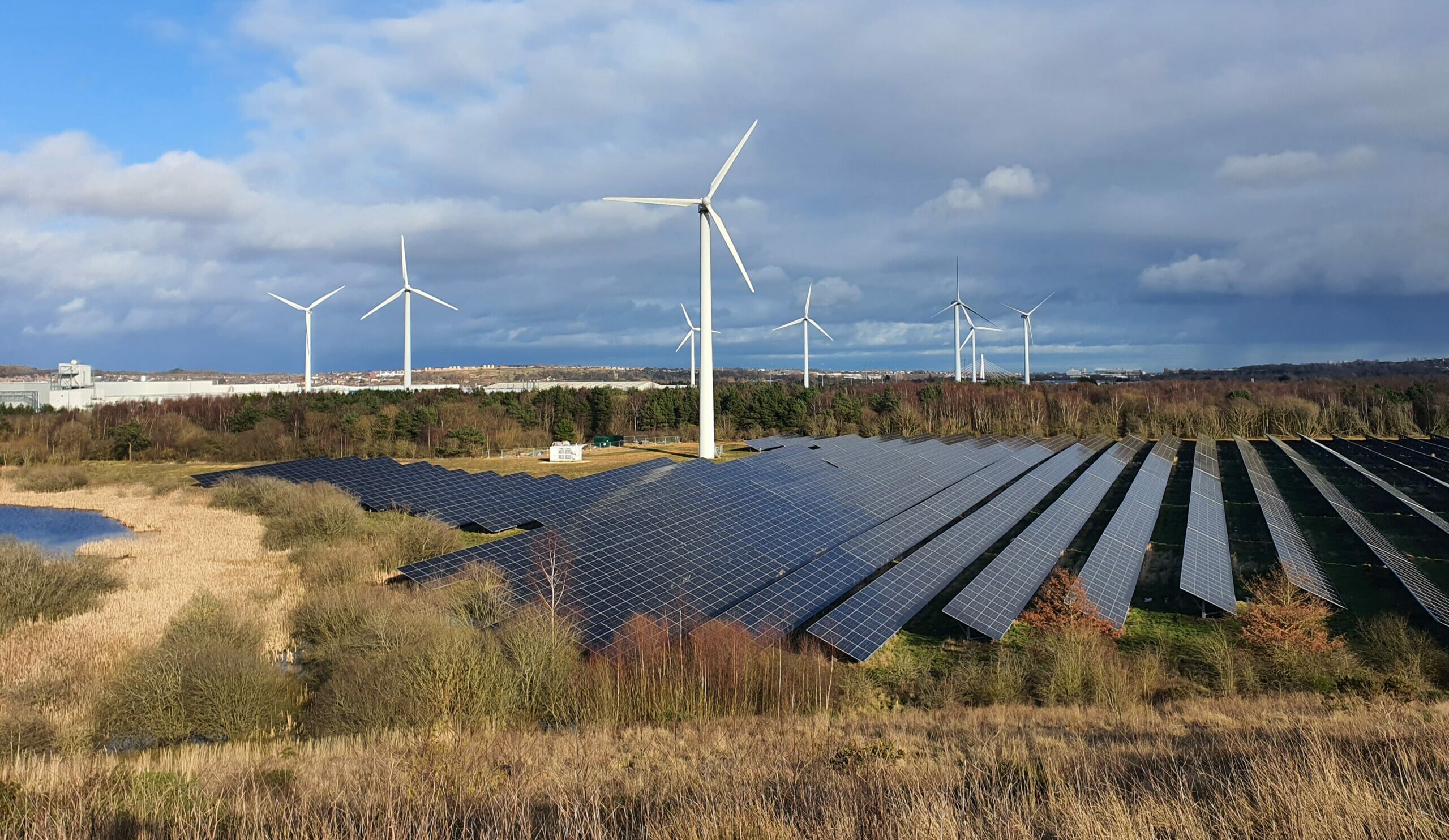
Members of Gondolin Land & Water recently attended a peatland restoration demonstration at an SSEN Transmission project in Argyll, exploring a forest-to-bog peat restoration technique.
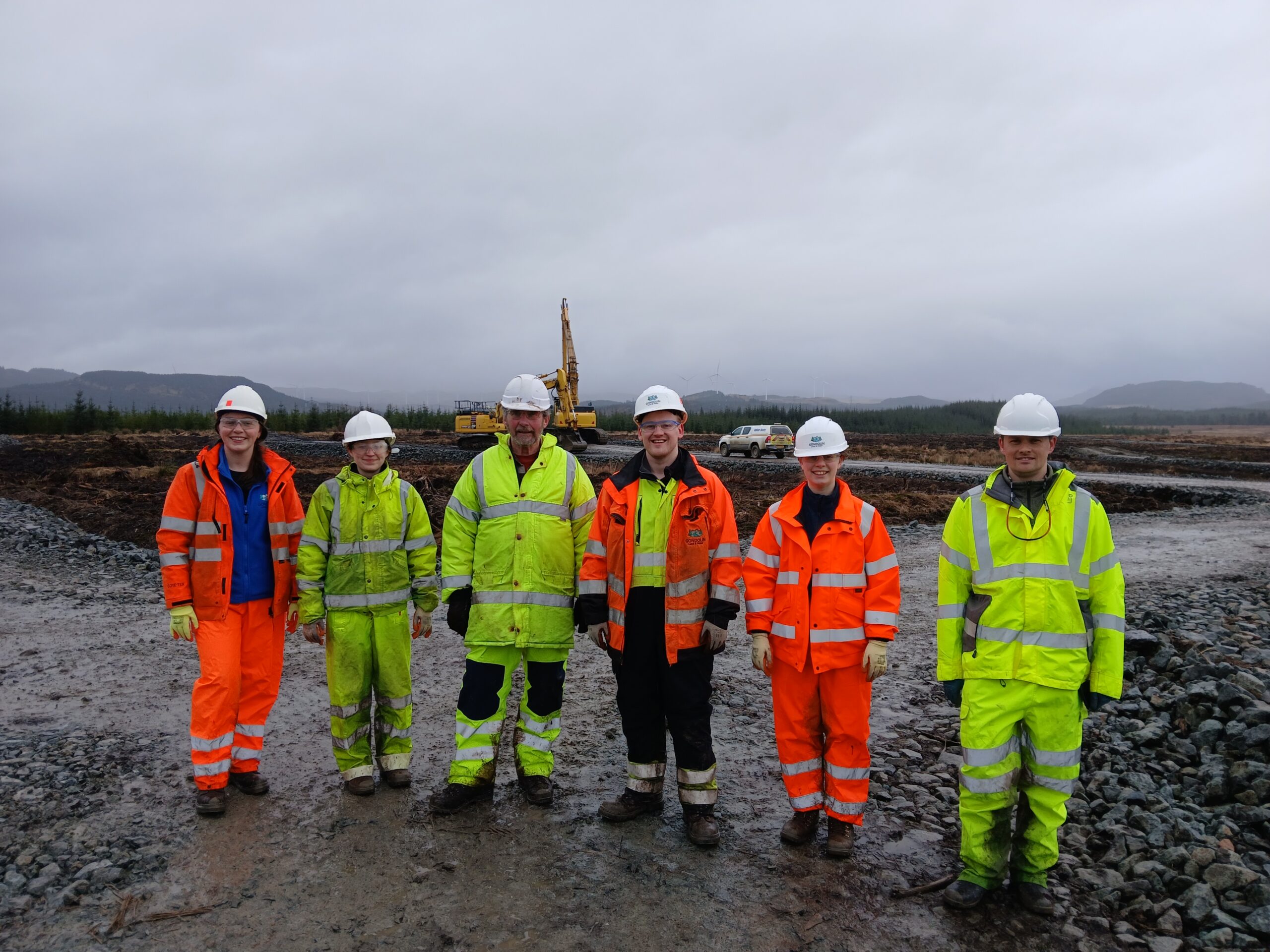
Katie Brydie, Anna Collyer, Eilidh Kirk & James MacIntosh on site during the demonstration, visiting active restoration areas.
Led by EcoHydrology Limited specialists Derwyn Lear and Alistair Lawson, the session provided a detailed overview of a pioneering technique using cell bunding and peat infill to enable peat reuse. The project is repurposing excavated peat from substation works to support large-scale restoration, aligning with Scotland’s NPF4 policies on protecting carbon-rich soils and enhancing biodiversity.
Why is Forest to Bog Peat Restoration Important?
Peatland restoration plays a critical role in addressing the climate emergency. Healthy peatlands act as significant carbon stores, while degraded peat can release substantial greenhouse gas emissions. Restoration techniques, such as rewetting and vegetation recovery, are therefore essential to protect carbon-rich soils, improve water quality, and enhance biodiversity across affected landscapes.
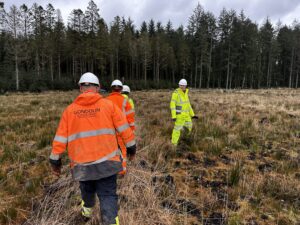
The day combined technical presentations with a site walkover, where our team visited both completed and active restoration areas. This gave a really useful, practical perspective on how the forest to bog peat restoration method is being implemented on the ground, including lessons learned, site management considerations, and the role of the Peat Clerk of Works (PCoW).
It was a valuable opportunity for our team to see how degraded peatland that has been impacted by historic forestry and drainage can be successfully rewetted and restored, while making beneficial use of excavated materials.
Our peat experts have gained valuable insights from the day and practical experience that will be shared with the wider team, directly informing our future works supporting our clients with Peat Management Plans and peatland restoration strategies.